
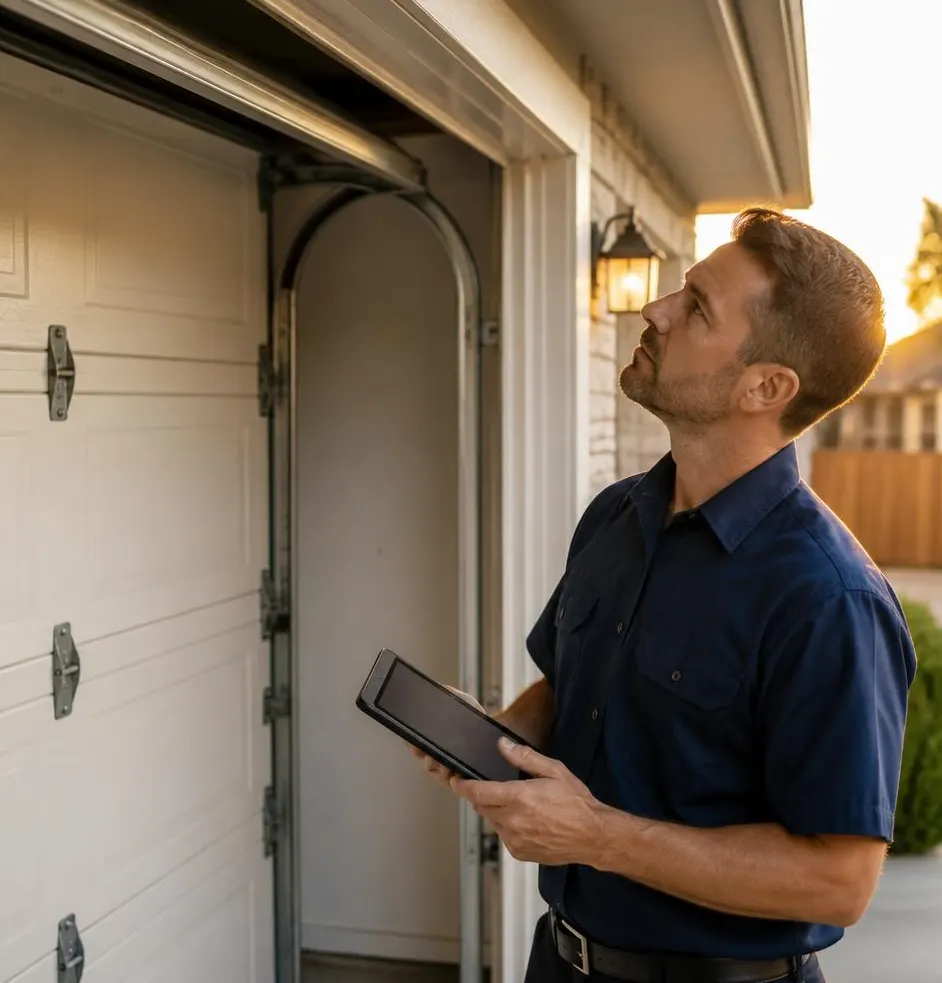
What a Technician Actually Sees on These Calls
A typical service call starts the same way: one spouse thinks the door just looks "a little rough" and the other is convinced it's about to fall off the track. When a technician shows up, it's usually somewhere in between. The bottom few inches of a steel door are bubbling or flaking with rust, the weatherstripping is crumbling, and if it's a wood or composite door, the bottom panel has swollen enough that the door drags or won't seat flush in the frame. Hinges and hardware near the bottom corners often show the worst corrosion, especially on doors that face prevailing wind or sit close to the coast.
None of this is random. It's the predictable result of humid air, salt carried inland on sea breezes, and the stop-and-start pattern of afternoon downpours followed by sun that bakes moisture back out unevenly.
Why Humidity and Salt Air Cause This
Steel doors rust when moisture sits on bare or scratched metal long enough to start oxidation. In a climate with year-round humidity and salt air drifting in from the coast, that process speeds up a lot compared to drier inland regions. Salt is especially aggressive because it holds moisture against the metal and breaks down protective coatings faster.
Wood and composite doors have a different problem: they absorb water. During hurricane season's heavy, repeated rain, the bottom edge of a wood panel can soak up moisture through tiny cracks in the paint or sealant. The wood fibers swell, the panel gets slightly larger, and then it doesn't fit the frame the way it used to. When the sun comes back out, it dries unevenly, which can cause warping on top of the swelling.
Rust vs. Swelling: Different Problems, Different Fixes
Rust (usually steel doors)
- Surface rust looks like orange-brown spotting or streaking. It's cosmetic at first but will spread if ignored, especially at seams, screw heads, and the bottom panel edge where water pools.
- Fix: sand off loose rust, prime with a rust-inhibiting primer, and repaint with exterior-grade paint. For hardware (hinges, rollers, tracks), a light coat of a moisture-displacing lubricant helps, but badly pitted or seized hardware should be replaced, not just cleaned.
- When it's more than cosmetic: if you can flake off rust with a fingernail and see pitting underneath, or if rust has reached the structural ribs or the bottom bracket that holds spring tension, that's a safety issue, not a paint issue.
Swelling (usually wood or composite doors)
- Early signs: the door is harder to close, drags along the frame, or leaves a visible gap where it used to seal tight.
- Fix: let the panel fully dry out, then reseal all exposed edges and seams with exterior wood sealant or paint, paying special attention to the bottom edge, which takes the most water exposure from splashback and storm rain.
- When it's more than cosmetic: repeated swell-and-dry cycles without resealing eventually cause permanent warping. At that point sealing won't fix it, and the panel needs replacing.
Is This Normal Wear, or a Sign of Bigger Trouble?
Some surface rust and minor seasonal swelling is normal in this climate and doesn't mean the door is failing. What's not normal:
- Rust that's spread to the torsion spring, the bottom bracket, or the track itself
- A door that no longer closes flush, leaving gaps where wind-driven rain can get in
- Visible warping that makes the door bind or bow instead of moving smoothly
- Rollers or cables that are rusted enough to look frayed or pitted
Any of these affect how the door performs during a storm, not just how it looks — and in a region with wind-load expectations for garage doors, a door that doesn't seal or move correctly is a real vulnerability, not a cosmetic one.
What You Can Do Now
- Wipe down tracks and hardware every few months, especially after a stretch of heavy rain, to clear salt film and grit before it sits and corrodes.
- Touch up paint or sealant as soon as you spot bare metal or exposed wood — small fixes now are far easier than replacing a panel later.
- Make sure the area around the door drains properly; standing water at the base of the door is what drives both rust and swelling fastest.
- Lubricate hinges, rollers, and springs with a garage-door-specific lubricant (not household oil, which attracts grit) a couple of times a year, and before hurricane season ramps up.
When to Call St. Augustine Garage Door Experts
If rust has reached hardware or structural components, or a wood door has swelled and warped to the point it won't seal, that's past a weekend fix. Our technicians handle Garage Door Cable & Roller Replacement for corroded hardware and Garage Door Maintenance & Tune-Up visits that catch rust and swelling early, lubricate moving parts, and check that the door still seals and performs the way it should heading into storm season.
If you're not sure which side of the argument is right, let us settle it. Call St. Augustine Garage Door Experts for a straightforward inspection anywhere in St. Augustine, FL, and we'll tell you exactly what's cosmetic and what needs real attention.