
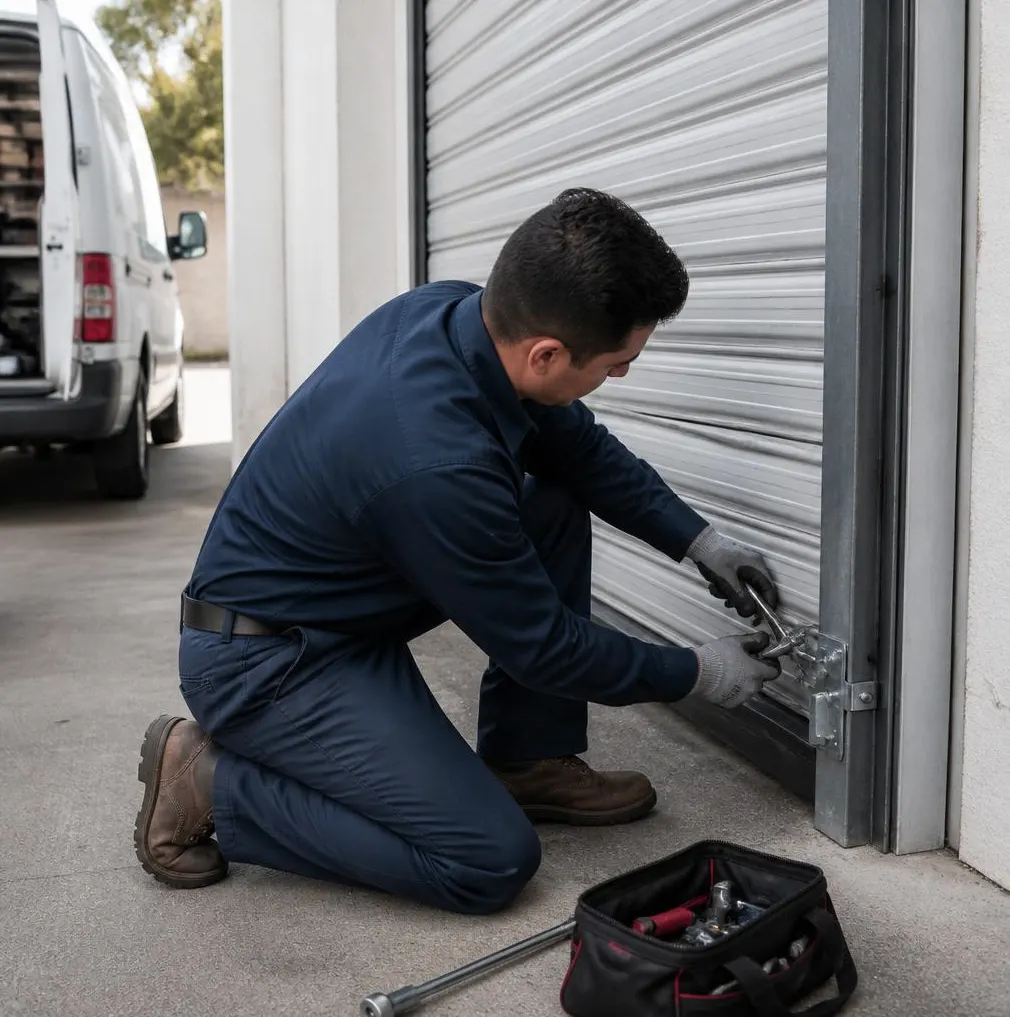
The Moment You Notice It
You're backing out for work and the garage door groans, hangs crooked for a second, then drops the last six inches with a bang. Your spouse says, "That's a landlord thing, call them." You say, "We signed a lease that says tenant handles maintenance." Neither of you has actually read that paragraph since move-in day. This is the argument almost every renter has eventually, and it's worth settling with facts instead of assumptions.
Whose Job Is It, Really?
There's no universal law dictating every garage door repair split — it comes down to what your specific lease says. But most leases follow a common pattern, and knowing it helps you read yours correctly.
- Usually the landlord's responsibility: structural issues, worn-out springs, failing openers, safety sensors that no longer reverse the door, and anything tied to normal wear from age or weather exposure.
- Usually the tenant's responsibility: damage from misuse — backing a car into the door, forcing it closed when something's blocking the track, letting kids slam the remote button repeatedly, or neglecting to report a problem that then gets worse.
- Often a gray area: battery replacement in keypads and remotes, lubrication and basic upkeep, and minor cosmetic issues like dents that don't affect operation. Some leases assign these to tenants outright; others leave them unaddressed, which is exactly where disputes start.
If your lease is vague, the safest move is to put repair requests in writing (email or text, not just a verbal mention) and keep a copy. That record protects you either way — if the landlord drags their feet on a safety issue, or if they later try to bill you for something that was already failing when you moved in.
The Move-In Walkthrough: What to Check Before You Sign
Most people walk through a rental checking faucets and outlets and completely skip the garage door. That's a mistake, because a garage door with hidden problems can turn into a liability argument six months later. Spend ten minutes on this before you sign anything:
- Test the auto-reverse safety feature. Place a roll of paper towels under the door and close it. The door should reverse immediately on contact. If it doesn't, that's a safety issue worth flagging before you move a single box in.
- Check the photo-eye sensors. Wave your hand through the beam while the door is closing — it should stop and reverse. Dirty, misaligned, or dead sensors are common and cheap to miss during a quick walkthrough.
- Look at the springs. You don't need to be an expert — just look for visible rust, gaps where a coil has separated, or a spring that looks stretched compared to its neighbor. Note it, photograph it, move on. Never touch a torsion spring yourself.
- Listen and watch the travel. Open and close the door fully. Grinding, shuddering, or a door that leans to one side as it moves usually points to rollers, cables, or track alignment that's already struggling.
- Check the weatherstripping and bottom seal. In a humid coastal climate, cracked or missing seals let moisture, bugs, and blowing rain into the garage. If it's already brittle or torn, that's existing wear, not something you caused.
- Look for rust and corrosion on hardware. Hinges, tracks, and the bottom panel take the brunt of salt air and humidity. Surface rust that's already there isn't your fault — write it down.
- Photograph everything with a timestamp. Phone photos with the date visible (or texted to yourself) are your proof of condition on day one. This single step prevents more disputes than any lease clause.
Why This Matters More in This Climate
Garage doors in this part of Florida work harder than they do almost anywhere else. Salt air accelerates corrosion on hinges, tracks, and spring coils, even a few miles inland. Humidity swells wood panels and can throw off the door's balance over time. And because this area sits in a wind-load zone, the door itself needs to meet certain wind-resistance standards — if a landlord swapped in a cheaper, non-rated door after a storm, that's a real safety gap worth asking about, not something to assume is fine. Heading into the quieter months after hurricane season, it's also a smart time for either party to schedule a tune-up before spring storms start building again.
When to Call St. Augustine Garage Door Experts
If your move-in inspection turns up a spring that looks off, sensors that won't reverse, or rust that's gone past cosmetic, don't wait for the lease debate to resolve itself — safety issues shouldn't sit unresolved. We offer garage door maintenance and tune-ups that give tenants and landlords alike a written, dated assessment of the door's real condition, which settles arguments fast. If something's already failed, our garage door spring repair and cable and roller replacement get it back to safe, reliable operation quickly.
Whether you're a tenant trying to document a pre-existing issue or a landlord who wants peace of mind before new tenants move in, call St. Augustine Garage Door Experts. We serve homeowners and renters throughout St. Augustine, St. Augustine Beach, Ponte Vedra Beach, Vilano Beach, Elkton, Hastings, Palm Coast, and Jacksonville Beach — reach out today and get it sorted before it becomes a bigger argument.