
The Short Answer
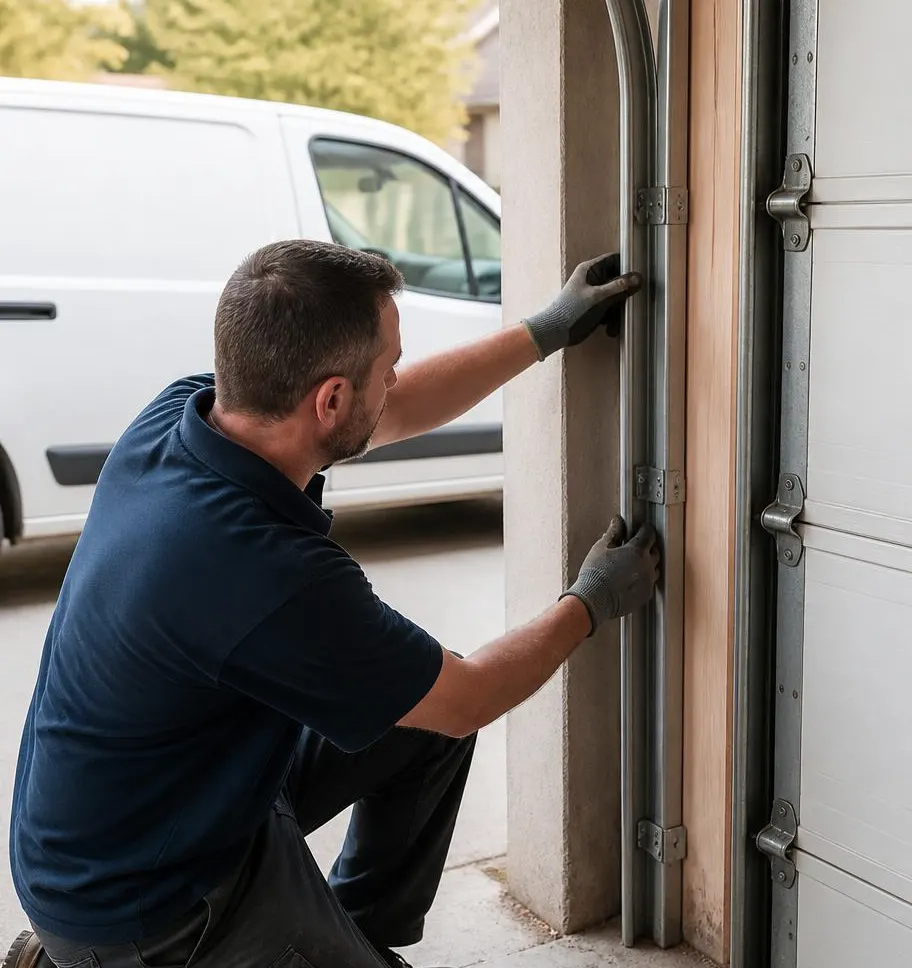
Grinding usually means metal is wearing against metal somewhere in the opener gears or the track. Squealing points to dry or worn rollers. Popping or banging almost always means spring or hardware stress. Rattling is loose hardware vibrating loose. Here's how to tell them apart and what fixing each one actually involves.
Grinding Noise
Grinding sounds like a low, mechanical scrape, often with a vibration you can feel through the door. It tends to get worse the longer you ignore it.
- Rollers worn flat or misaligned: A technician checks the rollers first, since they're the easiest fix. Flat spots or chipped nylon rollers grind against the track with every cycle. The fix is swapping them out — a straightforward part of a roller replacement visit.
- Opener gear wearing down: If the rollers look fine, the next check is the opener's drive gear, a plastic component that wears out over years of use. A worn gear grinds under load and eventually strips. Replacement means opening the opener housing and installing a new gear kit.
- Track misalignment: Last on the list because it's less common — if the track has shifted (from a bumped door, settling, or storm wind pushing on the panels), the rollers grind against bent or crooked rail. This needs the track re-aligned and re-secured, not just lubricated.
Squealing Noise
Squealing is a higher-pitched sound, usually tied to the door's opening or closing motion rather than constant.
- Lack of lubrication: This is checked first because it's the most common cause and the cheapest fix. Humidity and salt air near the coast wash out grease faster than you'd expect, leaving hinges, rollers, and the track dry. A proper tune-up uses garage-door-specific lithium grease, not WD-40, which actually dries out and attracts grit.
- Worn rollers or bearings: If lubrication doesn't quiet it down, the rollers themselves are the next suspect — bearings inside the roller wheel wear out and squeal under friction even when lubricated.
- Loose hinges: Hinges that have worked loose let panels flex slightly as the door moves, creating a squeal at the pivot points. Tightening or replacing hinge hardware usually solves it.
Popping or Banging Noise
This is the noise that gets homeowners' attention fastest — a sharp bang, sometimes loud enough to be mistaken for something falling.
- Spring under uneven tension: Checked first because it's also the most dangerous. On doors with two springs, one wearing out faster than the other creates uneven tension that pops audibly with each cycle. This is not a DIY adjustment — torsion springs are under enough force to cause serious injury, and a technician handles the tensioning with the right bars and clamps.
- A spring nearing failure: A single loud pop followed by the door feeling heavier to lift, or not moving at all, usually means a spring has already broken or is about to. Spring repair means replacing it (and often its matching spring, since they wear at similar rates) with the correct size for the door's weight.
- Hardware flexing under wind load: On wider doors, especially during storm season, wind pressure can flex panels enough to pop at the seams or where panels meet the track. A technician checks reinforcement struts and wind-load hardware, which matter more here given how often storms push directly on garage doors facing the coast.
Rattling Noise
Rattling is a looser, shakier sound, often noticeable as a vibration throughout the whole door rather than one spot.
- Loose nuts and bolts: The first and most common check — track brackets, hinges, and roller brackets all have fasteners that loosen over thousands of open-close cycles, and more quickly after high winds. A tune-up includes going bolt by bolt with a wrench.
- Worn chain or belt in a chain-drive opener: A chain that's stretched or loose on the rail rattles against the opener housing. Tightening or replacing it resolves this.
- Loose panels after storm stress: After heavy wind events, panel seams can loosen even without visible damage. This is worth a check during hurricane season rather than waiting for it to get worse.
When to Call St. Augustine Garage Door Experts
If the noise is a pop, a sudden grinding under load, or the door feels heavy or uneven when it moves, stop using it and call — that's usually spring or cable trouble, and it can fail further with continued use. We'll diagnose it on-site, and depending on what we find, that might mean a Garage Door Spring Repair, a Cable & Roller Replacement, or simply a Garage Door Maintenance & Tune-Up to catch loose hardware and dried-out lubrication before storm season puts more stress on it.
If your garage door in St. Augustine, St. Augustine Beach, or anywhere in St. Johns County is making a noise that wasn't there last month, give St. Augustine Garage Door Experts a call — we'll track down the real cause and get it fixed right the first time.